Tangy Noodle Salad

Click here to view recipe.
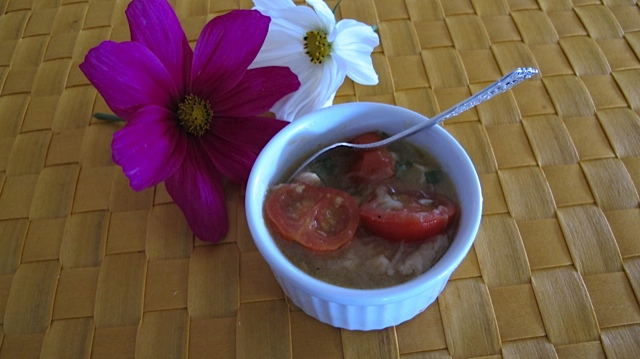
Tangy Noodles!

Tangy Noodles!

It’s almost the 4th of July and if you are invited to or in charge of  a potluck, you might be scratching your head, trying to come up with something delicious and easy to prepare. Potato salad? Baked beans? Coleslaw?   If you’re like me, you’ve been there and done that.  Time to think outside of the box.

Folks, this is it.  Another tried and true recipe from my catering days!!  If my children are reading this, they are gagging by now since they all, at one time or another, worked for me in my commercial kitchen, and had to boil noodles, grate carrots, toast sesame seeds or put together batches of tangy noodle (aka capellini) salad.  We’d don disposable gloves to toss the noodles and dressing together, then this salad was stored in huge, full-sheet deep pans.  After six hours of nonstop cooking before a huge event (think 400 guests) I’d make a little extra of this salad to take home and then grill and add sliced chicken and make it a meal in one.

Sometimes my son’s entire baseball team ate at our house so I kept this handy for those 17 year old boys.  They loved it, the adults loved it, everyone loved it! Alas… my kids begged me to stop making tangy noodles.

All eating phases generally end, and now my children happily eat this salad if I make it in their homes or when they are visiting Seattle.   It’s perfectly balanced and satisfying and an inevitable crowd pleaser. Plus it’s a little different and visually attractive enough for any 4th of July buffet!

Go forth (or 4th!) and try this.  You can also omit the grated carrots and instead dice up yellow, red and/or orange bell peppers to give it a celebratory appearance. I’ve also added chopped cilantro or black sesame seeds to the top in lieu of green onions. Leftovers really keep well too – at least for a few days.  I’ve even stir fried the noodles as is with some type of protein just to be fancy.

The recipe you will read below has morphed over the years…the original called for black Chinese sesame oil and Chinese balsamic vinegar and fresh noodles, too.  I’ve tested and retested to develop a recipe that is easy – featuring ingredients that can be found at most supermarkets or in your pantry.

Tangy Noodle Salad

Feeds at least 10-15 eaters on a buffet

pf-icon2

Ingredients:
  • 1 lb. dried Angel hair (capellini) pasta
  • 3 Tbsp dark toasted sesame oil (I have Trader Joes brand)
  • 1 Tbsp canola oil
  • ¼  cups tamari sauce (I’ve used soy sauce in a pinch, but prefer tamari)
  • ¼ cup balsamic vinegar
  • 1 teaspoon chili oil* – it must be spicy (add more the next day if needed but be careful!)
  • 2 Tbsp honey
  • 1/3 cup toasted sesame seeds  (sometimes I use black sesame seeds to switch it up)
  • 1-2 large grated carrot
  • 2 scallions (light green and white parts) sliced into thin rings-for garnish
  • 1/3 cups salted cashews – for garnish
Instructions

Fill a large stock pot with water and add two teaspoons of table salt and bring to a boil.  Meanwhile, combine the rest of the dressing ingredients (the oils, Tamari, vinegar and honey) and whisk together in a small bowl.

Put the angel hair  noodles into the pot and keep boiling them until they are al dente (a little less than package directions – mine took three minutes).   Drain really well, shaking off all the water.  Keep them in the colander, and let them cool a bit, but keep stirring the noodles in the colander so they don’t stick together.

Add half of the dressing to the slightly warm noodles and toss well to combine. I do use disposable gloves to do this.  I add the remainder of the dressing about a half hour later when the noodles are more room temperature.

Stir in the sesame seeds (reserve two tablespoons for garnish) and the grated carrot (reserving a tablespoon for garnish).  Refrigerate overnight or for at least an hour at room temperature.  Right before serving, toss and taste, adding more balsamic vinegar or tamari as needed for your taste buds.   For me  it is seasoned most often well and I do not need to add another thing, but see what you think.

I like to serve this at room temperature – the flavors seem more robust to me this way.  Garnish the finished dish with the reserved sesame seeds, carrots, scallions and cashews. Enjoy!

*I’ve been in places without chili oil, and I simply add cayenne to the dressing until it is fairl


Share
Posted in Pasta, Salads & Dressings, Side Dish | Tagged , , | Leave a comment

Eggs For Kids

“So what do you cook when your grandchildren visit?”  This is a question I am asked by curious friends who know I love to bake and make special things for my children and their kids as well.

There are many foods I love to make, but breakfast is a particularly special time for me. Sometimes I’ll make  a batch of granola or hot cereal or french challah toast or pancakes.

But my eggs are legendary. There are two types of breakfast eggs I reserve for these kids, and they originate from my childhood.

Chicken in a Basket

Chicken in a Basket

1) Chicken in a Basket

AKA toad in the hole aka bulls eye,  the name “chicken in the basket” was what my mom, Merry Klass, called this concoction.

Take a slice of bread (I use whole wheat but any type is fine) and cut a hole in the middle with a glass.  Heat butter in a frying pan, place the bread in and crack the egg inside the hole of the bread.  I fry the circle of bread alongside the egg/bread slice.  Flip over gently and serve with some pepper and salt.

Yellow Egg Sandwich

Yellow Egg Sandwich

2)  Yellow Egg Sandwich

My mother concocted – and named – this delicacy. Basically you whisk an egg, add one tablespoon of milk and fry it on medium heat in butter.  Don’t stir, but flip the omelette over when it will hold together.  Heat briefly on the second side, then put it on a piece of bread skimmed with a layer of mayonnaise or butter or what have you.  Top with another piece of bread much like a sandwich and cut in half.

I must admit that I love yellow egg sandwiches and make mine more gourmet with tomato slices, curly lettuce, even avocado. At times I make this sandwich when I am rushing around, and I wrap it in foil to eat in the car.

What are your favorite things you make for your kids or grandkids??

Share
Posted in Breakfast | Tagged , | 2 Comments

A GRATE Cooking Tip!

microplane orange

So Simple – So Smart

Those of you – and I know this means each and every one of you – who regularly read my posts understand that I don’t use a lot of fancy dancy kitchen equipment.  I’m not a proponent of the latest greatest gadgets out there; I’m really a minimalist when It comes to what I keep around my kitchen.

I’ve waxed poetic about my microplane grater, which I use a ton for grating citrus zest and hunks of Parmesan cheese.  So here is a little tip I learned while taking a cooking class at The Book Larder with the incredible Rachel Coyle of Coyle’s pop up bake shop.

Turn the microplane upside down and grate your zest with the microplane’s sides facing up so you can see how much you have grated.  The sides make almost a three sided box so the grated stuff won’t pour out.  Otherwise, if you are anything like me, you will be peeking at the underside of this tool, scraping off what sticks there  with your finger to see how much has collected.

This is so genius that I keep wondering why I didn’t think of this first?  And it’s another reminder of why I continue to take cooking lessons.  I always learn something new and useful!!

Share
Posted in Kitchen Essentials | Tagged , , , | Leave a comment

Kale & Cauliflower Salad

Click here to view recipe.

Kale & Cauliflower Salad

Kale & Cauliflower Salad

I know, I know. Everyone is sick to death of kale. Kale salad, in particular. Me? I really love kale salads – not to mention sauteed kale and kale in soups. But in salads I only like it when the bitterness of the kale leaves isn’t overpowering.

Let’s begin at the beginning. I eat in restaurants less than most of you, but I love to occasionally patronize my Queen Anne neighborhood place in Seattle, GRUB. It’s consistent, the food isn’t fussy but it’s always fresh and seasonal, the ambience is nice and homey, and it’s obvious that the owner loves what she does…how could I not support a place like this?

The point is, though, that they have a wonderful, room temperature-ish kale and cauliflower salad. It might just as well be called a cauliflower-kale salad because there are about equal parts kale and cauliflower. I always order this whether we stop by for dinner or appetizers.

I loved it so much I decided to try a similar version at home. Originally I thought I’d make mine with lacinato kale, also known as dinosaur kale or black cabbage. It is one of my favorite types of kale because it is pretty tender and tasty. Grub’s kale salad is composed of curly, firmer kale that tends to be more bitter.

Curly Kale

Curly Kale

But hold on. When I visited my daughter in early April, she did HER rendition of the salad using curly kale and adding in tiny tiny barberries that she soaked. The salad went from a “9” to a “10” in my eyes. The tiny, ruby barberries were the perfect addition. These little barberries, available in Middle Eastern grocery stores, are tart with a hint of sweetness and I love love love them. I’m already figuring to other ways to use them in my baking and cooking…

Beautiful Barberries

Beautiful Barberries

Now this salad is in my lineup. It is locally sourced, vegan, non-GMO, non dairy…in other words it fits all the popular foodie parameters. If this sounds bland or tasteless or non-appealing, think again. THIS RECIPE IS FAB!

Kale & Cauliflower Salad

Serves 4-6

pf-icon2


 Ingredients
  • 4 cups green curly kale (I used redbor kale from my farmers market)
  • 4 cups cauliflowerettes, cut into ½ inch pieces
  • ½ cup cooked and rinsed garbanzo beans (chickpeas)
  • About ¼ cup lemon tehina dressing
  • 2 Tbsp fresh chopped mint
  • 2 Tbsp dried barberries, dried cherries, dried cranberries or pomegranate seeds-depending on the season. If using cherries or cranberries, dice them into tiny currant sized pieces.
Instructions

Preheat the oven to 425 and line a large, rimmed cookie sheet with parchment or foil.

Begin by removing kale leaves from the stems until it looks like you have 4 cups worth, and roughly tear into pieces that are about 1 ½ inches. Add ½ tsp sea salt and massage for 3-5 minutes. Taste the kale and if it is no longer bitter, you are done and should get a masseuse license! When you are finished it will have decreased in volume and feel softer. Set aside while you do everything else.

Toss cauliflowerettes with olive oil and bake on a prepared cookie sheet in the oven for 15 minutes. They won’t be finished but you can add beans to the pan and do both at the same time!

Dry the garbanzo beans well and coat them with one teaspoon extra virgin olive oil and roast along with caulifloweretttes on the same rimmed sheet. Continue cooking both the beans and cauliflower for another 10 minutes or until nicely browned, sizzling and even charred on the edges. Remove from the oven.

Whisk together the tehina dressing.

You can make the salad while the vegetables are still warm or do it once they are room temperature. Add the kale to the roasted vegetables, barely coat with tehina dressing.  Season with salt and pepper if needed, and fold in barberries and chopped mint. Eat. Eat more!

Share
Posted in Salads & Dressings | Tagged , , , , | Leave a comment

Babotie!

Click here to view recipe.

I posted this recipe early early on in my blogging life, and at the time I had a lot fewer readers. Three years later, I still consider this one of my primo recipes. Lately I’ve been swapping out ground lamb for the ground chuck, and I’ve made it in 2 cup ramekins so every guest gets their personal serving.

MAKE THIS RECIPE. Now. With a green leafy salad, you’ll thank me.

◊ ◊ ◊ ◊ ◊ ◊ ◊

Elephants at Kuyenda BushCamp

When most people think about safaris they likely envision exploring foreign lands in search of elusive, wild animals. This was certainly an important part of the trip I took that included Kuyenda BushCamp in Zambia, Africa. However, much to the surprise of our safari hosts and cooks, I was equally interested in investigating the culinary aspects of this exotic place. I don’t think it’s every day that visitors sneak into the camp’s open-air “kitchens” asking questions about how to prepare local delicacies.

We arrived at this safari camp following a magical morning of viewing lions, elephants, wildebeest, giraffes and zebras. Our large army-green colored Land Rover came to a stop in the middle of a dusty plot of land in the middle of the African wilderness. The air was dry and hot and still and, once our driver turned off the engine, I was struck by the utter quiet. There wasn’t a commercial building in site and my husband and I felt blessedly sheltered from the tourist crowds.

Beautiful table at camp

While the surroundings were simple and rustic, our camp manager was decidedly not. Babette Alfieri, hostess extraordinaire, met us with an exuberant welcome. This is a woman whose career started on 5th Avenue in New York and who, along with her daughter, has established Africa Calls, one of the best adventure travel companies I have ever employed. Soon after we reached the bush camp, Babette guided us toward a table laden with the most beautiful array of food. Chicken salad, beet salad, quiche and a seasonal green salad with freshly baked bread were on display, elevated with ethnic platters and African-made serve ware. The table resembled a spread out of Gourmet Magazine. Babette had taught the staff to garnish every single dish so that the table was inviting and, as she told us, so we would “feast with our eyes.”

The most memorable part of that meal was a dish called Babotie (pronounced ba-boor-tea) an African dish originated by the Cape Malay people. This delicious, moussaka-like food is the national dish of South Africa and combines curried meat and fruit with an aromatic golden topping. I was immediately intrigued by the flavor profile so I wandered over to the cooking area to talk with the chefs. These were proud men who had likely been cooking for tourists for decades. They seemed a bit surprised by my inquiries but quickly became engaged in an animated discussion of spices and cooking techniques. I can still recall their lilting voices as they proudly explained the intricacies of preparing this exotic dish.

Babette & Marilyn with Baboti

When I returned home, I contacted Babette and she kindly sent me a recipe for Babotie. I immediately tried it out and, despite the fact that I did not have the luxury of cooking in the open air, surrounded by the sounds of wild animals, the dish turned out exactly as I remembered it. It has a long list of ingredients, but most everything was already in my kitchen. Every time I prepare Babotie for friends and family I feel like I am sharing a bit of my travels to South Luyenga State Park, and I am immediately reminded of the friends I made in Kuyenda.

Making Babotie

Bobotie (adapted from Babette’s recipe)

Serves 8-10

pf-icon2

Ingredients
  • 1 large onion, diced
  • 1 ½ Tbsp canola oil
  • 1 Tbsp paprika
  • 1 Tbsp turmeric
  • 1 tsp curry powder
  • 1 tsp ground ginger
  • 1 tsp salt
  • ½ tsp cayenne pepper
  • 14 oz can of chopped tomatoes
  • ½ cup golden or brown raisins
  • 2 Tbsp chopped dried apricots
  • 2 Tbsp mango chutney
  • 1 Tbsp ketchup or chili sauce
  • 1 Tbsp red wine vinegar
  • 1 Tbsp Worcestershire sauce
  • Hot sauce (or Tabasco), 1 dash
  • 2 slices bread, cubed
  • ¾ cup milk (or rice milk)
  • 2 lbs ground chuck
  • 3 Tbsp cream or coconut milk
  • 4 eggs
  • Ground cinnamon, 1 dash
  • Vanilla, 1 dash
  • 4 bay leaves (for decoration)
Instructions

Preheat the oven to 350 degrees.

Heat the oil in a large sauté pan over medium-low heat. Add the onions and cook until soft, about 5 minutes.

Mix in all the dry spices and cook 2-3 minutes. Add the meat and cook until brown, approximately 8-10 minutes.

Remove from the heat and fold in chopped tomatoes, raisins, dried apricots, chutney, ketchup/chili sauce, vinegar, Worcestershire sauce and hot sauce. Return to the heat, bring to the boil, then gently simmer 2-3 minutes.

Meanwhile soak the bread cubes in the milk for approximately 5 minutes. Squeeze excess milk from the bread by pushing it through a strainer, reserving the milk and add bread to the meat mixture. Add cream to the reserved milk so you have a total of ½ cup.

Cook the mixture until the excess liquid has evaporated, approximately 20-30 minutes.

Transfer the mixture to an oiled oven-proof dish (9 x 13 oval baking dish) and even out the top.

In a bowl, beat together eggs and remaining milk and stir in a dash of cinnamon and a dash of vanilla. Pour the milk mixture over the mince so there is a thin layer of milk covering it.

Decorate with bay leaves, and bake in the oven for 25-30 minutes or until custard is set.

Bobotie is traditionally served with yellow rice which is made using turmeric. I serve it with brown rice and a very simple salad with a savory vinaigrette. This dish is even better reheated the following day.

◊ ◊ ◊ ◊ ◊ ◊ ◊

End notes: if you are interested in contacting Babette and learning more about the glorious bush camp in Zambia – you can contact her via Africa Calls or Kuyenda BushCamp.

There are a number of wonderful cookbooks that feature authentic dishes from throughout Africa. One of my favorites are The African Kitchen by Josie Stow and Jan Baldwin.

If you’re going on safari, I highly recommend you find two books by Trevor Carnaby. Beat Around the Bush – Birds and the similarly titled book on Mammals are chock full of easy explanations and beautiful photography. I found them to be indispensable! But buy them before you go – they’re twice as much in Africa.

I like to use authentic serverware whenever possible. Some of my favorite silver pieces are made by Carrol Boyes and can be purchased online. This “Functional Art” is hand made by artisans in Cape Town, South Africa and features her signature figural style. Her trademark materials include pewter, aluminum and stainless steel.

Share
Posted in Africa, Meat | 1 Comment

Comforting Brown Butter Coconut Dessert “Bread”

Click here to view recipe.

Comforting Coconut Bread

Comforting Coconut Bread

It’s not enough that I dream and think about food and recipes nearly every single day – I think about these subjects in every location imaginable – whether it’s at the gym, the grocery store, the farmer’s market, passing restaurants, in my own kitchen… But it’s not in a bad way at all.  I love to read cookbooks, cooking magazines and cooking blogs. And I found this particular recipe reading a food blog.

Two things attracted me to this recipe, which I haven’t changed much from the Smitten Kitchen  where I found it:    #1: The very thought of browned butter – my “ go to” way of enhancing my roasted vegetables and even my chocolate chip cookies –  anytime I want a nuttiness plus butter flavor. And #2: I can make this bread with very few bowls, one measuring cup (½ cup to be specific) and a spatula.  No mixer bowl or beaters to clean up!

I love to present a sliver of this bread, slightly warmed, with some slices of Pink Lady apple or Asian pear or early Spring strawberries for a not-too-sweet dessert.  I often freeze half of the loaf too because sadly there are just two adults living in my house.  I’ve made this a total of four times in the past month and the next go around I’m going to bake it in individual muffin tins.  And to be honest, the third reason I love making this is that it isn’t something I need to decorate at all.  I love desserts to look pretty but I don’t have the time or the patience to frost, pipe, sprinkle…all those fancy finishing touches.  I rather go for great tasting desserts.

If you choose to make and serve this for company, be sure to find out  whether your guests like coconut or not.  Before my catering days I did not realize that coconut and cilantro are two flavors that people either love or do not like one bit.  So inquire, then go forth and make this if the answer is “I like coconut.”

Kudos to Smitten Kitchen (Deb Perelman) – I have her book, I read her blog and she is one of the young uns that has it together in terms of good recipes, photography and writing style.  I wish I could hate her, but I am in awe.  And here is my version of her inspirational recipe!

Fresh Out of the Oven

Fresh Out of the Oven

Brown Butter Coconut Bread

From Bill Granger, via Wednesday Chef, via The New York Times, via Smitten Kitchen via My Global Kitchens (a few minor tweaks).  I think every single recipe on the Internet is via via via….

Makes One Loaf

pf-icon2

Ingredients
  • 2 large eggs
  • 1 1/4 cups 2% milk
  • 
1 teaspoon pure vanilla extract
  • 
2 1/2 cups (315 grams) all-purpose flour
  • ½  teaspoon  salt
  • 2 teaspoons aluminum free baking powder
  • 1 teaspoon ground cinnamon
  • 
1 cup minus 1 Tbsp granulated sugar
  • 
5 ounces sweetened flaked coconut (about 1 1/2 cups, but I actually weighed this)
  • 
6 tablespoons or ¾ stick of salted butter, melted until it is just browned*
  • 
Vegetable oil or nonstick cooking spray for the loaf baking pan
Instructions

Preheat oven to 350 degrees.

In a  quart sized bowl, whisk together eggs, milk and vanilla.

In a medium bowl, sift together flour, salt, baking powder, cinnamon, and sugar.  Add coconut, and stir to mix. Make a “well” in the center of these ingredients, and pour in the egg mixture, then stir wet and dry ingredients together until just combined. Add browned butter*, and stir until just smooth — be careful not to overmix.

Butter and flour a 9×5-inch loaf pan, or coat it with a nonstick spray. (I spray it, then put parchment paper to fit the bottom of the pan then spray on top of the parchment again.)  The batter is pretty loose for quick bread.   Spread batter in this pan evenly and bake until a toothpick inserted into the center comes out clean, anywhere from 1 to 1 1/4 hours. Cool in the pan five minutes before turning out onto a cooling rack.

I cannot imagine serving this with butter or with anything sweet or salty at all.  It is perfect as is, particularly when a little warm.

*To brown the butter:put it in a small metal saucepan over medium high heat  until it melts.  Continue cooking, swirling the pan all the time for another two minutes or so until the color turns to a dark golden brown and smells nutty.  (Right before this, my butter always foams up).  Immediately remove from the heat and scrape the butter into a glass bowl so it doesn’t keep cooking.

Share
Posted in Breads, Dessert | Tagged , , , , , | Leave a comment

Do The Math: Kitchen Calculations

My Favorite Measuring Devices

My Favorite Measuring Devices

Let me begin this post by admitting that math is, actually, my strong suit. As far back as I remember I always did much better with math and reasoning skills than language. And I’ve been  proud of  my keen ability to calculate – it sure comes in handy! I can quickly compute what “40% off” means or how many cups of broth I need when I multiply a recipe by four. Maybe I like math because it is black and white, things can be explained in concrete terms and there is always a “right” and a “wrong” answer.

That being said I do not judge anyone who isn’t proficient at mathematics. Everyone’s brain is different. That said, I do believe that learning some basic calculations can help immensely when it comes to cooking and baking. For example, there are three teaspoons in a tablespoon – so if you see a recipe written that asks for four teaspoons, you will know that you can measure one tablespoon + one teaspoon. If you triple four teaspoons, this is equivalent to four tablespoons. No need to one-by-one measure out twelve teaspoons! And yet, when I had my catering business, I’d see my workers measuring teaspoon by teaspoon 99 times out of 100!

For those of you who can use a little extra help with kitchen calculations – here are some tools I use to measure (as pictured above):

Metal Measuring Cups

These are for dry ingredients like flour or sugar…NOT LIQUIDS people. Scoop stuff into the metal cup, level it off with a knife and voila! (background left)

Oxo  2 oz LIQUID Measuring Cup

This is my favorite little gadget, a tsp/tbsp LIQUID measuring cup with a lip. I use this one daily – especially when making salad dressings or crackers. It’s easy to see where two tablespoons will be (look at the meniscus of the liquid) and it saves me messing around with a teaspoon or tablespoon. Our supermarkets carry this little cup-it’s a 2 ounce size. (rear center)

Pyrex LIQUID Measuring Cup

This is my older-than-the-hills pyrex measuring cup for liquids such as oil, water, and the like. I actually have four versions of this glass measuring cup (1 cup, 2 cup, 4 cups and 8 cups) and I use them all. (right front)

Metal Measuring Spoons

Ta da, finally – my metal measuring spoons tablespoon, teaspoon and fractions thereof. (front left)

I really don’t like plastic cooking utensils and I use metal or glass whenever I can. Just one of my hangups – but to me they clean much more easily and don’t hold onto odors.

And here are the basic equivalents you should memorize or post somewhere until you learn them by heart:

3 teaspoons = 1 Tbsp = ½ ounce
1 cup = 8 ounces = 16 Tbsp (½ cup = 8 Tbsp)

Class dismissed!

Share
Posted in Kitchen Essentials | Tagged , , , | Leave a comment

New York Green Festival

The Green Festival!

The Green Festival!

It was 11 AM in New York City, April 27, 2014.  Where was I?  At the Green Festival on Pier 94, of course!

Huh?  I was in New York to meet my three sisters and our husbands, although half of the crew hadn’t yet arrived.  My sister Kay and I roughly mapped out our day for this particular Sunday, being sure to save major exhibits and events and even restaurants for when the entire gang was assembled.  And so it came to pass, in the land known as the Big Apple, that we attended the Green Festival, a huge event with products and services displayed to encourage “green” living.

Playing with my sister Kay

Playing with my sister Kay

As you can imagine, the massive convention- center like room loomed large – and we were greeted with green t-shirt-adorned 20 somethings.  People at the check in booth looked more like Seattleites than New Yorkers.

First up, the Green food displays.  Woah! Pretty much everything was labeled non-GMO, gluten free, locally sourced, non-dairy, vegan, vegetarian, sustainable, organic, eco friendly, no sugar added…with lots of samples of ice cream (sans dairy), energy bars (lots of dates and nuts), and countless flavored energy drinks.  Why did we bother to have breakfast anyway?

I bet you think I came for the food booths, but you are wrong.  I was just as interested in the whole enchilada – the beauty products, home products, and everything else.

The Soom Girls

The Soom Girls

Along the way we met Kay’s acquaintances from Washington, DC:  two of the three sisters who started Soom Foods.  Kay’s acquaintances from Washington DC, the founders of SOOM Foods.  Their products now include chocolate tahini and the packaging is fresh and  the font is now large enough for me to read with my old eyes.  If you haven’t yet tried this tahini, it is  available on Amazon.com and it’s so worth choosing this brand for many of the recipes I’ve posted (salad dressing, tahina sauce for meats, hummus, even cookies).

Adorable Three Birds Dish Cloths

Adorable Three Birds Dish Cloths

On to the green, eco friendly, non-food items, beauty products, packaging and cookware.  My personal favorite was Three Blue Birds. This small, Connecticut-based company displayed  the most adorable 100 percent biodegradable Swedish dishcloths.  Read all about them here.  The cloths I loved most were designed by Lasse, Lynda’s Finnish-born husband.   In chatting with them, I learned that Lasse is an engineer by day but loves to come home and draw designs for these dishcloths.  I purchased a dozen to give as hostess gifts, birthday gifts, you name it.

After a few hours, Kay and I stepped back out to the sunny New York weather and continued our day as tourists.  I loved our time together – it was one of those activities we hadn’t thought of doing until a couple of days before the festival.  My kind of travel for sure – I try not to be rigid with what I will do and like to fly by the seat of my pants to find pearls of adventure at times!


Share
Posted in North America | Tagged , , | 2 Comments

Asparagus … Again

Click here to view recipe.

Beautiful Asparagus

All winter long we ate root vegetables, or “dirt” vegetables, in huge quantities, and I truly love to buy and prepare winter legumes.  But in my world once I spy fresh asparagus in the markets, my brain sings SPRING!

I was “stuck” on repeat mode for a long while and prepared room temperature asparagus with a soy/sesame sauce that I still love, but I recently took a cooking class where I was inspired to make asparagus with fresh herbs and shallots.

The version I witnessed during the quick cooking demonstration was more French and involved oven roasting the spears of asparagus and topping them with a hand whisked sauce that resembled a salsa verde with sieved egg yolk and garlic.  This took much longer than my pared down formula.

I think my recipe is easy and really, really good.  I’m proud of myself for visualizing the garnish with not only a grated egg but with pickled onions as well.  Not only does this taste great but it’s a bit crunchy (think good texture) and pretty, too. I know I sound a little full of myself, but see what you think!

I am admittedly a fresh herb lover and feel I “hit the jackpot” with this recipe.  It graced our Passover table, and I’ve made this asparagus dish too many times to count.   I have every intention of repeating this preparation as long as the asparagus looks good this Spring.

Asparagus with Herbed Shallot Emulsion and Pickled Bermuda Onion

Serves 4-6

pf-icon2

Ingredients
  • 1 large bunch fairly thick asparagus (about 1 ¼  lb)
  • 1/3  cups chopped herbs – this time of year I use tarragon, dill and parsley in equal parts – but any combo of herbs you love is fine
  • ½ medium shallot, diced
  • 1 tsp lemon zest
  • 1/3 cup extra virgin olive oil (about 5 ⅓ Tbsp)
  • 1 hard boiled egg (grated for garnish)
  • 1 small red Bermuda onion (for garnish)
  • ½ cup seasoned rice wine vinegar (to marinate the onion)
  • Juice of 1 lemon  (right before serving)
Instructions

Snap off the ends of the asparagus spears.  Meanwhile bring a large saute pan with about a half an inch of water and two teaspoons table salt to a boil.  Add the spears and keep simmering.  Leave on medium heat for two minutes so it turns brighter green and is fairly firm when pierced with a fork.  Remove to an ice water bath and let sit for five minutes.  Dry thoroughly on a dishtowel, put in tupperware or paper towels until ready to continue.  (This can be done a day or two before you complete the recipe and serve it.)

Alternately, you can roast the asparagus by coating them with one tablespoon of olive oil on a parchment lined rimmed cookie sheet at 450 degree convection (475 regular heat) oven for 10-12 minutes until done to your liking.  Do not crowd or overlap the stalks or they steam rather than roast.

If you blanch or roast the asparagus ahead of time, then an hour or so before serving, remove the asparagus from the fridge to bring to room temperature.

Before making the herb emulsion, I prepare a lazy person’s pickled red onion to use as garnish and to give the finished dish some crunch. In a pint glass jar, I add about 1/3 cup of red onion rounds (slice thinly) then barely cover these with seasoned  rice wine vinegar.  Add a pinch of salt, put the lid on the jar and store it in the fridge – they will be ready after your asparagus is plated and ready to garnish!  Impressive and easy, no?  And there will be enough onions to use on sandwiches or other veggies for garnish.

To make the herb emulsion, put the chopped herbs, chopped shallot and lemon zest with the olive oil in a narrow tall container and use your immersion blender to puree it. The sauce should be thickish like a loose pesto.  You have to be able to toss this with the asparagus so too thick isn’t good.  If it looks like you need more, add additional olive oil.

If doing at the last minute then after the asparagus is cooked and still warm or even room temperature, toss with the herb emulsion (I don’t think you will need the entire amount but you could make even more asparagus if you don’t want leftover sauce).  Dress right before serving  and season with salt, lemon juice, and more olive oil.  Top with grated hard boiled egg whites or whole hard boiled egg.  Sprinkle with some pickled onion.

Share
Posted in Vegetables | Tagged | Leave a comment

Chayote (Cho Cho) Salad

Click here to view recipe.

Colorful Chayote Salad

Colorful Chayote Salad

When I am in Belize for long periods of time, as I often am, I inevitably crave vegetables.  For some reason, however, the typical local produce (carrots, tomatoes, onions and cabbage) just isn’t that interesting to me. And although the larger stores patronized by expats carry a greater variety – including squash, broccoli, cauliflower, lettuce and the like – these imported vegetables are very, very expensive and not all that fresh.

So in the interest of finding a new vegetable to savor, I decided to try Chayote (rhymes with Coyote, the animal) this week after listening to Gaylynn in my yoga class.  She had been scuba diving in the Turneffe Islands and the chef there served a wonderful chayote salad.  His “recipe” (I use quotes because most chefs don’t exactly hand out rare formulations) was to soak the thinly sliced and peeled vegetable in vinegar for seven hours, then add lots of cilantro and basil, and finally dress it with a balsamic vinegar, coconut oil and mustard emulsion. OK…

I suddenly flashed to the coleslaw salad dressing sitting on my pantry shelf, left over from the slaw we had last weekend.  I know this powerful mix is a sweet and tangy vinaigrette.  And I decided against balsamic vinegar because it’s not really Belizean and turns the finished salad a brownish color.   The coconut oil?  My husband doesn’t like the taste of it so I still have it for medicinal and cooking purposes but I don’t use it freely.  I wanted to keep  this  local and simple.

To be candid this was the first time I’ve used raw chayote.  In the past I put it in chicken soup where it became more translucent as it cooked and really had no flavor.  It’s been served to me in local restaurants steamed with zucchini, onion and carrots and I found it to be pretty nondescript.

Fresh Chayote

Fresh Chayote

Chayote (also callled cho cho) is ubiquitous in Central America and can be found at all the little pop-up tienditas here.  It looks very similar to a light yellowish-green pear with smooth skin (there are apparently prickly skinned varieties but I’ve never seen them) and belongs to the same family as melons, cucumber and squash.   The texture is exactly like an Asian pear – it feels identical when cutting through the flesh.

The raw chayote tasted moist, crispy and crunchy but bland and flavorless; in fact if I closed my eyes I’d have no idea what I was eating. OK…so I knew  it needed kind of an assertive dressing and some color in the salad as well.  Not too many ingredients to put chayote in the back seat but enough to bring it to life!

My family was visiting when I tried this salad and they all gave it a big thumbs up.  I’m happy to have ventured forth with a totally new creation – especially one that takes advantage of the local produce and is so refreshing for our hot days here in paradise!   The chayote in this salad is a little sweet but crisp and satisfying.

Chayote Salad

Serves 6

pf-icon2

Ingredients
  • 4 chayotes
  • ½ green  habanero
  • ¼ cup coleslaw salad dressing
  • 1 large carrot (diced ⅓ inch)
  • ¼ cup cilantro leaves (chopped)
Instructions

Cut the chayotes in half and peel, then remove the “pits” (like in a pear) with a spoon or knife.  Dice into ½ inch.  It is imperative to peel the chayote under running water or wear gloves and wipe off the flesh before dicing – there is a slimy substance just under the peel that will coat and dry out your fingers otherwise.  Trust me on this!  The peel is very thin and easy to remove with a potato peeler.

Slice up the habanero. If you thickly slice it, you’ll see it if it lands in your dish and then you won’t bite down on this hot pepper unless you choose to do so.  This amount of habanero isn’t that powerful anyway so add more if you like spicy food.

Let the cubed chayote and sliced habanero (including the seeds) marinate in the dressing, refrigerated,  for at least four hours, stirring it every hour or so.

Before serving add the carrots and cilantro.  The dressed salad keeps for three days in the refrigerator if you manage to keep from eating a lot of it.

Share
Posted in Central America, Salads & Dressings | Tagged , | Leave a comment