Winter Red Lentil Soup

Click here to view recipe.

Winter Red Lentil Soup

Happy 2012! One of my resolutions this year is to post a recipe I’m currently making on the first Wednesday of every month – something I love but more important – a dish that is extremely easy to prepare. There might not be a rhyme or reason to these posts, but I feel like switching it up a bit so here goes #1 for 2012…

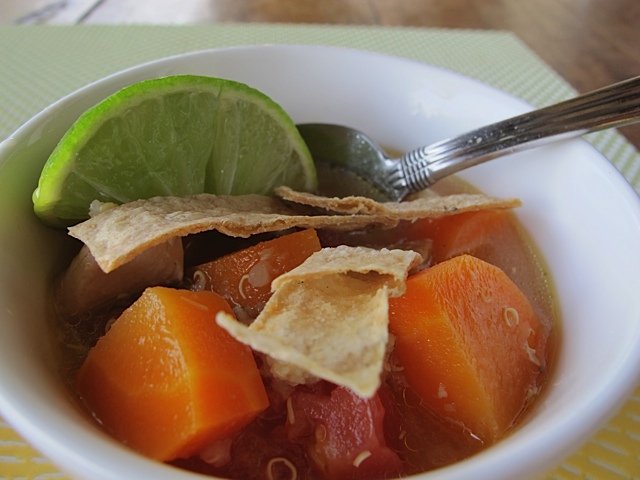
I love to make this red lentil soup when it is cold outside and when I don’t feel like going grocery shopping. All the ingredients – ginger, spices, red lentils and broth – are items I always have in my pantry or freezer. And the spicy ginger and inviting orange color make this soup the perfect solution to warm your insides on chilly days. This is easy, a little different and delicious for dinner with some homemade corn bread and a nice salad. Boy, does it ever make your house smell great!

Winter Red Lentil Soup

Serves 7-8

Ingredients:
  • 1 Tbsp extra virgin olive oil
  • ½ large onion , diced small (around 1 cup)
  • 1 Tbs. ginger root, peeled & grated
  • 2 large cloves of garlic, minced
  • 1 tsp ground cumin
  • 1 tsp ground curry powder
  • 1 cup red lentils* (see note below)
  • 5 cups of chicken broth or vegetable broth (homemade or canned)
  • 1-14 ½ oz can diced tomatoes with their juice (I like organic Muir Glen fire roasted tomatoes, but any brand will do)

*Red Lentils are high in protein and iron; they are often used in Turkey, India, Afghanistan and Pakistan. They become mushy as they cook so they are easier for you to digest. Red lentils are very small and can be found in the bulk section of many markets or are packaged – the bag might say “masoor.”

Instructions:

Heat oil in a 4 quart soup pot over medium heat and sauté onion, ginger and garlic for 3 minutes. Add spices and stir for 30 more seconds until they become aromatic.

Mise en Place

Add the lentils, broth and tomatoes and bring to a boil over medium high heat, cover and reduce heat to low. Set simmer for 45 minutes.

You can either use a hand blender, a regular blender or food processor to emulsify it until it is smooth. I have an old Braun “stick” immersion blender that I utilize so that I can just stick the wand into the pot of hot soup and blend away.  This contraption comes in handy when making applesauce, smoothies, potatoes, baby food and other “creamy” soups or sauces, and a myriad of other dishes when I want a smooth texture but don’t want to fuss with cleaning a regular blender. All I do when finished is fill a large bowl with a few drops of dish detergent and water, then blend this mixture. Rinse it, dry it and the immersion blender is ready for the next time. (Waring and Cuisinart both make a stick blender for under $50.) If you don’t have an immersion blender, use a regular blender but be sure to cool down the soup a bit and blend in about three batches.

Blending soup in the pot

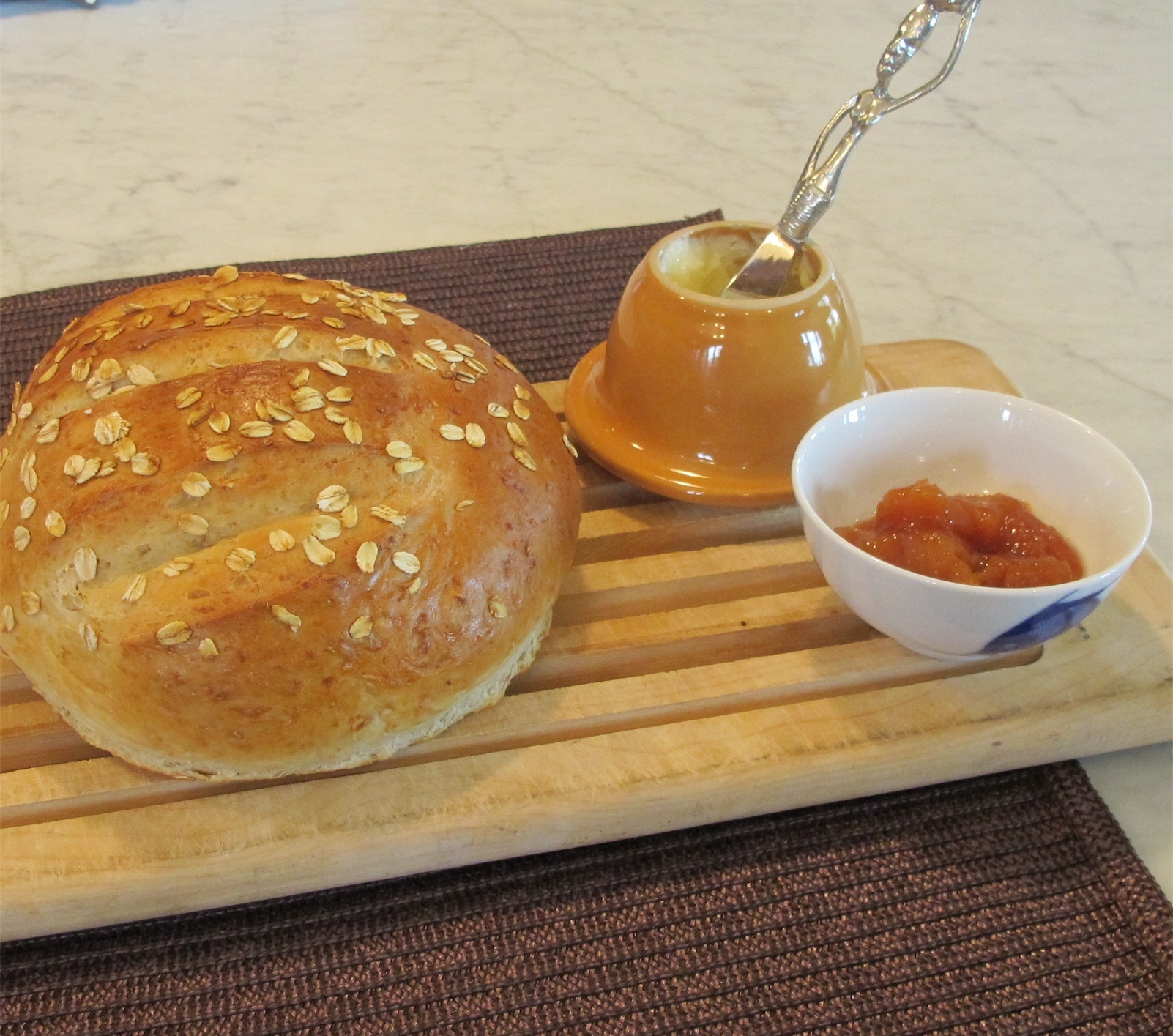
I serve this with a dollop of sour cream or Greek yogurt, some chopped parsley and a warm loaf of homemade honey oatmeal bread (recipe coming soon!).

Notes:

  • You don’t need to blend this soup – it is equally delicious as is!
  • This soup freezes extremely well for up to 3 months

The final product!

Share
Posted in Soups | Tagged | 8 Comments

The Unsinkable Minnie


Video of Minnie Making Tortillas

Click here to view video on YouTube

I vividly remember being exposed to abject poverty when I was 28. During a visit to El Salvador, we naively rented a vehicle to drive through some of the outlying areas. Gorgeous, large stucco homes with carved wood garage doors were perched alongside corrugated aluminum or cardboard huts, and the disparity of those with wealth and those without even plumbing or electricity felt wrong. Sometimes ten or twelve people survived inside the dismal huts. Whenever we traveled with our children during their middle school and high school years, we tried to show them how others in third world countries live and survive. Travel changed my belief system and I maintain that it molded my children’s views as well. All of us are aware that we are fortunate to have an intact, loving family, to have an education and to have life skills.

Fast forward to today. Many of my tales from the beautiful isle of Ambergris Caye in Belize make it sound like the perfect little quaint Caribbean community. For those of us who have enough money to vacation or live down here, it is perfect. Unfortunately, there are countless Belizeans who live from hand to mouth and who barely make ends meet.

Minnie

Earlier this summer we were riding our golf cart from “town” to go back home and prepare food for lunch. A young woman carrying a huge package of toilet paper and paper towels flagged us down and asked for a ride two miles north of my house; I told her we would take her as far as our home and she gladly accepted the ride. Her other choice: to walk barefoot for the 5 miles carrying her paper products. The man who gave her a ride to town loaded up his golf cart to the hilt with her food supplies and there was no room for her to ride with him back home. I was immediately drawn to her and we talked the entire ride. Here is her story as she told it to me.

Minnie is 41 years old; she is now single. She has 9 children ranging from 5 years old to 25 years of age; 5 of them live with her. She has never attended school yet speaks both Spanish and English quite fluently. She was born and reared in Belize near Douglas Village of the Corozol district. Her father died when she was 5; he was hunting with her uncle, and the uncle allegedly handed a gun to her father who was perched high in a tree. The gun, according to Minnie, backfired and killed him. Shortly after her mom “met the next man” and left Minnie with her very poor grandparents. She told me that her grandmother sometimes made dresses from old socks so Minnie would have clothing to wear.

Two of Minnie's Sons Samuel & Phillipe

By the time she was 30, Minnie had 7 children. She parted ways with her husband because he battered her and was verbally abusive; at one point he put a knife to her throat and raped her. She has been alone supporting her family ever since. Minnie’s mother now lives in Cancun and Minnie hasn’t seen her in 7 years; as she put it, this is her greatest sadness. She feels that her mother does not love her, or she would not have left her for the remainder of Minnie’s youth. And yet, she talked about wanting to send money to help her mother. She also talked about her dream of her father caring for her, had he not passed away at such a young age.

Minnie’s 24-year-old daughter is married, has two children and keeps asking Minnie to help her financially which Minnie is not able to do. Her 22-year-old daughter was living in Belize but Minnie does not know where she is now; it was evident from the tone of her voice that she is greatly saddened by this. Her 17-year-old daughter Emily (Chabelly in Spanish) helps her every day with cleaning, taking care of the 5 and 8 year old boys and running the food concession. Emily went to school until age 13; Minnie described her as shy and extremely serious.

With Minnie and her daughter Emily

Minnie works seven days a week. She begins at 5 am every day when she prepares three meals on her open fire for the construction and resort workers. Breakfast means 3 homemade flour tortillas, rice and beans and some type of chicken or eggs for the beans. Lunch is usually rice and beans and chicken (some days shrimp or beef) and dinner is the same as breakfast. Each meal costs $2.50 US. On average she feeds 25 workers each day. Everyone buys lunch with “credit” and at the end of each week she collects from the resort that pays the workers (bartenders, maintenance workers, landscaping help, etc.) Sometimes she collects no money and provides up to $40 US for food for which she is not reimbursed because some of her patrons were fired or don’t really work at the resort. She told me her only profit margin is from selling juice, Coca Cola and bags of chips. Meanwhile, on the day we met her she went to town and spent $600 USD for soda, chicken, rice, beans, eggs and supplies to last the week.

Minnie showed me their simple living space, which was an 8 X 8 foot plywood room. Two ancient refrigerators occupied a lot of space, and they were filled with frozen chicken, soda and cooking supplies for the week. Along the other wall were a double sized bunk bed and a hammock. Minnie sleeps in the hammock, three children sleep on the lower bed and two more sleep on the top bunk alongside toilet paper, food containers and nonperishable supplies. I don’t believe they have running water.

As Minnie finished her story, she told me something that I will hold forever: “It’s not a sin to be poor – it’s a sin to be nasty.”

This woman’s tenacity and endurance were so inspiring. Despite the cycle of poverty that pervades and the circumstances that led to her very difficult life, Minnie is a fighter. And I have seen so many women like her. Women who are not educated and end up with low paying jobs. Women who start having children at age 15 because that’s what their mom did. Absent fathers. Women who send money to their parents and support their children at the same time. Women who go without medical care and are subject to crime, poor nutrition, inadequate diets, high rates of disease. And the cycle continually repeats itself.

I searched for Minnie during our last visit and was unable to find her. I hope to see her when I return. Perhaps she’ll teach me how to cook some of the dishes she makes. I know she’ll continue to inspire me for many years to come.

I hope you’ll watch my video of Minnie and her family – you will see how she makes her flour tortillas on a cast iron plate over the open fire. For those of you who want to make flour tortillas at home, this YouTube video demonstrates exactly how I learned to make flour tortillas – I was taught to use oil instead of shortening. Also, oil the counter as you roll or pat the dough into the round shape before flying (flip the dough over so both sides are oiled) and use a seasoned cast iron skillet or griddle.

Share
Posted in Central America | 3 Comments

Ponegranate Salad

Click here to view recipe.

Beautiful Dubrovnik

It’s been two years since we travelled to Croatia with our dear friends Mark and Linda – but it feels like yesterday. On most of my adventures I have a pretty good idea of what to expect but I didn’t really know much about this region and was excited to get “off the beaten path.” I certainly wasn’t disappointed. As soon as we landed we were struck by the striking, ancient architecture and the sheer beauty of the land.

The trip was very loosely structured – we only reserved a hotel for the first two and final two nights. Other than that – we decided to wing it! The four of us met in Zagreb, Croatia’s largest city and its capital. After spending a few days in this beautifully preserved, historic city we rented a car and drove down the Dalmatian Coast and took ferries to visit the islands of Split, Korcula, and Hvar, ending in historic Dubrovnek, an old maritime city nestled on the Adriatic Sea. Along the way we stayed in “sobes” (pronounced SO-bay) which were rooms the locals rented out, usually featuring a small kitchenette and attached to a larger home where the owners lived.

Plitivice Lakes National Park

We took the ferry to the Adriatic island of Korcula, perhaps my favorite place. Up and down the hilly streets were red tile roofed houses and medieval sites. The island was amazingly clean, quiet and walkable with interesting beaches, restaurants and vistas everywhere we turned. We found lodging just by strolling up and down the streets and looking for signs that rooms were available. The unit we stumbled upon was actually an apartment with two bedrooms, a shared bathroom, a lovely kitchen and even an outdoor area.

The sweetest grapes

Growing outside were fat, ripe purple grapes that were sweeter than any I’d ever tasted. Mediterranean herbs also grew wildly, making the air distinctly sweet and fragrant. My favorite feature of this sobe was the pomegranate tree. I’d never seen one before and it was exotic and colorful, laden with fruit that we picked ourselves. The owner of this beautiful home gave us a bottle of local herbal brandy that she made along with yeasted coffee cake – typical of Croatian fare.

Pomegranates right outside our window!

I’ve been thinking of this wonderful trip recently because pomegranates are everywhere I look – filling the produce stands and decorating holiday wreathes. And for years I’ve been making the most delicious pomegranate salad dressing so I thought I’d share it. The dressing and the salad I traditionally make alongside it are so fresh and bright-tasting – the perfect accompaniment to the many heavy dishes we eat during these cold months. I made it right after Thanksgiving and have served it at least five times since then!

Salad with Pomegranate Dressing

Pomegranate Dressing

Makes about 1 cup

Ingredients:
  • 3 Tbsp water
  • ½ tsp salt
  • ¼ cup canola oil
  • ¼ cup extra virgin olive oil
  • ¼ c pomegranate molasses*
  • 2 Tbsp-4 Tbs  honey (add enough to taste) I use 4 Tbsp or 1/4 cup because I like a sweeter dressing)

* Though pomegranate molasses might sound exotic and difficult to find – I’ve seen it everywhere – even at the grocery stores in Iowa! It’s delicious in all sorts of dressings and sauces so I hope you’ll buy a bottle and try it out.  The brand at my supermarket is “Cortas” and comes from Lebanon

Instructions:

Combine everything  in a small bowl and whisk together to emulsify. Add honey or molasses to taste. The salad dressing can be kept unrefrigerated for up to a week

Serve with seasonal greens or arugula, pomegranate seeds or pear slices, Marcona almonds or toasted nuts of any kind, or feta or goat cheese, or avocado. The salad pictured in this post contains baby romaine, roasted chopped hazelnuts, cubed feta cheese and pomegranate seeds. I like to begin by putting some dressing in the bottom of my wood salad bowl, then add the lettuce and toss until coated. I add the cheese and seeds at the end so they remain colorful.

Pomegranate and delicious seeds

Note: a trick I learned a while back is to cut the thick skinned pomegranate in half, then put both halves into a bowl of cold water. I then break it apart under the water and scoop out the seeds under the water as well. The white pithy stuff that floats to the top can be skimmed away, and I end by straining the seeds and drying them well. Using this method to retrieve the seeds, my hands are not stained red and there aren’t squirts of pomegranate juice all over my kitchen. The drained, dried off seeds stay in a covered container in the refrigerator for 10 days or so. I love pomegranate seeds in salads or used as a topping for hummus or other bean dips, and even on top of my granola with yogurt and honey.

Share
Posted in Europe, Salads & Dressings | Tagged , , , , | 2 Comments

Hot Fudge Sauce – A Gift From My Kitchen

Click here to view recipe.

The gift of chocolate!

Every holiday season I create a special surprise for a list of folks who are especially dear to me. Bottles of wine? Gift Certificates? No, I am a believer of gifting food items from My Global Kitchen. One year I made my Spice Rub, put it into fancy jars and distributed it throughout the city. Last year my friends received little bags of biscotti tied with festive ribbons. This year will be the Year of Hot Fudge. While it costs me far less money to make my own special gifts – my main reason for personally crafting these treats is much more important. I cherish my friends and want to take the time and care to make them something truly personal and unique.

This recipe has a funny history. My daughter Rachel’s day care provider, Mikaela, is an amazing woman on many levels. She is young (mid 20’s), smart, and manages to care for 6 youngsters in her home. I have watched this former Montessori teacher in action and she truly loves and appreciates each and every one of her charges. Her home is spotless and organized, and she peruses Craigslist and Goodwill for appropriate toys and does a fantastic job. Everyone’s birthday, Valentine’s Day, and Halloween are cause for serious celebration with the kids. Did I mention that every holiday season she makes a surprise FOR THE DAYCARE PARENTS?? Hot fudge sauce was the gift a couple of years ago, and when I tasted it, I went a little crazy. I am, admittedly, a chocoholic with no desire to come “clean”. I love my chocolate – the darker, the better. So I was in heaven.

Fudge sauce drizzled over ice cream

Last year when I visited Iowa Mikaela shared her recipe. The original instructions call for a double boiler which Rachel doesn’t own, so we rigged one up using a stainless steel bowl that fit over a sauce pan. The fudge sauce came out great, but I wanted mine less sweet so I went home and reworked the recipe. In the middle of my preparations I got a frantic call from Rachel…she tried to make the fudge and two times the sugar crystallized. She searched the internet and found that most recipes utilize corn syrup! “NO NO, NO!” I cried. There had to be a solution. I paid special attention as I made this last batch pictured here and learned that the key is to use a very, very low flame and to be patient.

So here is my 2011 Gift from MY Global Kitchen. I’m dedicating this to Mikaela, and I hope she doesn’t mind that I use more chocolate and less sugar than she does!

Hot Fudge Sauce

Makes 4 half-pint jars

Ingredients
  • 1 stick butter
  • 5 squares of unsweetened chocolate (5 oz)* (Bakers or Hershey’s chocolate are just fine)
  • 1 -12 oz can evaporated milk
  • 1 ⅔ cups granulated sugar
  • 1 tsp of vanilla
Instructions:

Put butter and unsweetened chocolate into a double boiler over very low heat. (I do this on my Wolf Range lowest simmer n a heavy pan. If you don’t have this function on your stovetop, use a double boiler or a rigged up double boiler. Use the smallest burner on a low setting.)

Let them melt together in the double boiler or pan. As soon as the chocolate and butter are barely melted, stir in the entire can of evaporated milk. The mix will be flecked with chocolate and not emulsified at all. Do not worry.

Immediately start adding sugar 1 tablespoon at a time – stirring constantly. This doesn’t take that long, because once the sugar is incorporated you add the next tablespoon.

Once all the sugar is in, be sure it is still on low, low heat and keep cooking, stirring every 5 minutes or so until thickened. My batch took 30 minutes to reach this point and never reached above 150 degrees when I checked the temperature.

Sauce cooking on stovetop

Once thickened, remove from the heat, add the vanilla and cool a bit before pouring into half pint jars. Screw on the lids and store in the refrigerator for up to 3 months.

I usually cover the lid with fabric, write a cute label and gift it along with a pint of vanilla ice cream and a little bag of toasted almonds.

Share
Posted in Dessert | Tagged | 6 Comments

Marilyn’s Meatloaf

Click here to view recipe.

Truly comforting food!

My neighbors just had a baby on Monday, and my gift to new parents is often a home cooked meal delivered within the first few days of new parenthood. I was thinking about this last night because I made my famous meatloaf, onion mashed potatoes and green beans coated with olive oil and tomato slices. It is nothing exotic or particularly gourmet – just good, old-fashioned comfort food!

I’ve been preparing meatloaf of at least 30 years and don’t even know where I found the initial recipe. My global adventures made me curious about the origin of this kitchen staple so I did a little investigating. Meatloaf, or some derivation thereof, has apparently been around since the 5th century. It is traditionally a German, Belgian or Dutch dish and my Italian friends adopted it to make meatballs. In America, German-Americans made it with scrapple – which was a mixture of ground pork and cornmeal. This doesn’t sound too appealing to me – but it was likely quite a treat back in the day. Meatloaf as we know it today didn’t appear in American cookbooks until the late 19th century and I can only imagine the hundreds of variations that have since been developed.

My own recipe has been tweaked over the years but the one thing I insist on is fresh, high quality meat. The butcher near my home has wonderful fresh ground chuck which I use without fail. Though many recipes call for it, I don’t combine pork or veal or any other meat with the beef. (I do make a delicious turkey meatloaf that is entirely different – I’ll reserve that for another post.) I don’t add any type of cheese or exotic ingredients. Everything that goes into the mix is always in my cupboard and fridge – eggs, bread, ketchup, carrots and so on. During the cold, dark winter nights this hits the spot and is an easy, last minute dinner for me to serve when I am not in a particularly creative cooking mood. (Yes, that happens even to me.)

A beautiful thing about this recipe is that it makes a large loaf and leftovers can be used in endless ways. I like to have meatloaf sandwiches with fancy mustard, greens, tomato, or slice and grill it and serve it as a “slider” or repurpose it open-faced with mashed potatoes and gravy for a slightly different twist. I usually double the recipe, even when I make it for the two of us and I leave one that hasn’t been baked in my freezer for times when I have no time or energy to cook.

Marilyn’s Meatloaf

Serves 6

Meatloaf Ingredients:
  • 1 slice of whole grain bread-cut off the crusts and tear into small pieces
  • ½ c tomato juice or soy milk or regular milk
  • 2 lb ground beef
  • 1 egg
  • ¼ c diced onion
  • ½ tsp. salt
  • ½ tsp ground pepper
  • 1 tsp dry basil
  • ½ c shredded carrots
Instructions for meatloaf:

Preheat the oven to 350 degrees.

Dump all these ingredients into a large bowl. Put on disposable gloves and gently mix the components together until they are combined. Remove from the bowl (don’t wash the bowl yet) and pat gently into a greased loaf pan. I bake it in my 40 year old 9 x 5 Pyrex meat loaf pan.

Before it goes into the oven

Slide the meatloaf into the preheated oven for 15 minutes, and while it is baking make the topping in the same dirty bowl.

Topping Ingredients:
  • 3 Tbs. brown sugar
  • ½ c ketchup
  • ¼ tsp nutmeg
  • Heaping tsp of dry mustard
Instructions for topping:

Mix the topping ingredients together well. After the meat loaf has baked for 15 minutes without the glaze, remove it from the oven. Gently cover the top with the ketchup-based sauce and bake another 45 minutes or until interior temp hits 160 degrees.

Rest for at least 10 minutes, the cut it into slices and serve.

Note: There is a lot of juice and fat that accumulates around the meatloaf when you bake it in a pan. Generally I pour all of this into a Pyrex measuring cup and remove the fat only, and then return the juice to the meatloaf pan. OR you can eat the meat loaf as is and refrigerate the leftovers. The next morning you will see an orange layer of fat that is easy to lift off with a spoon.

Some of my friends add ½ cup of Parmesan cheese to the meat mixture.

Share
Posted in Meat | Tagged | 2 Comments

Elderflower Martini

Click here to view recipe.

I love Chicago any time other than the cold winter when freezing wind comes off the lake to take my breath away. My son lived and worked in Chicago immediately following his undergraduate years of college. We didn’t get to visit often but when we did, we enjoyed touring the art museum and the waterfront and finding unusual restaurants in the variety of neighborhoods around town.

My Iowa daughter, 7 months pregnant, wanted a four day weekend away from her 2 ½ year old: away from work, household duties, and diapers. Just some relaxation and time for herself before baby #2 was born in June. She tried her best to recruit college friends, high school friends, and local friends to accompany her to Chicago for this weekend. No one could leave work or get out of family obligations – all of those things that make it difficult if not impossible for mid-30’s women to just “get away.” When her in-laws agreed to come to Iowa and help babysit, I promised to fly to Chicago and be the “friend.” I found us a great hotel bargain; we planned restaurant meals, shopping excursions, city tours. I even found a good airfare from Seattle to Chicago, a direct flight.

So imagine my disappointment and dismay when two days prior to this planned trip I woke up with excruciating, debilitating back pain. Herniated disc. I could not even walk to the car let alone navigate an airport or airplane. Flat on my stomach, I could not stand or even roll over without screaming out in pain. The following day I endured an emergency steroid injection. I HAD TO CANCEL MY TRIP. I HAD TO DISAPPOINT MY DAUGHTER. That part made it more awful than the pain.

Rachel & Kay

Enter my savior, Sister Kay. She loves Rachel, Rachel loves her, they both love Chicago. Kay agreed to fly from Maryland to Chicago, and take my place for the four days. Done. Whew! So even though I was in pain I knew Rachel was in great company (maybe even better company than the initial plan?). The two musketeers slept late, shopped together, ate amazing meals, and came home boasting of a cocktail they had than was made with St. Germain Elderflower liquor. I heard about said cocktail a LOT and looked up the restaurant menu, checked out the ingredients listed on the menu and made a very close approximation of this delicious martini. Pears remind me of fall, and this martini is GOOOOD even if you hardly ever drink martinis (I’m talking about Kay).

Rachel and her hubby maintain that I write too much for my posts, so this one is short just for Rachel with only a couple of pictures! No description of the architecture tour, miracle mile, art museums, restaurants, shopping, sleeping. Just the facts, ma’am.

Chicago Elderflower Pear Martini

“She She” Chicago Elderflower Pear Martini

Ingredients for homemade sweet and sour mix:
  • ½ cup water
  • ½ cup sugar
  • 1/3 cup fresh squeezed lemon juice
  • 1/3 c fresh squeezed lime juice
Instructions:

Boil together water and sugar until sugar melts and everything liquefies. Remove from heat, cool and then stir in lemon and lime juices.

This makes a lot more sweet and sour mix than you need, but keep it around for other uses.

Ingredients for the martini
  • 2 oz elderflower liquor (St. Germain brand)
  • 2 oz white grape juice
  • 2 oz sour mix (directions above)
  • 4 oz Grey Goose pear vodka
  • Green grapes for garnish (optional)
Instructions:

Place the martini ingredients in a shaker and fill to the brim with ice, Shake well, strain into a martini glass and garnish w/green grapes threaded onto a wooden skewer (see picture).

This is a very light and sweet cocktail and I like to pair it with something a little savory – perhaps salted nuts or crunchy crackers with goat cheese.

Share
Posted in Beverage, North America | Tagged , , , | Leave a comment

Turkey Wings in British Columbia

Click here to view recipe.

Eileen, Nanette & Me

Following a recent business trip to British Columbia, I had the pleasure of lunching with two dear friends, Eileen and Nanette. I’ll never forget how Eileen suddenly suggested that the three of us plan a short getaway back up to Canada for a birthday celebration for Nanette and me. Of course it took several emails back and forth to set the dates, and we divvied up the hotel reserving, driving, event planning and so forth among us. But it was a GO!! Eileen was the chauffeur, Nanette the map reader and navigator, and I was the event and restaurant planner.

Seattleites consider Vancouver, BC our back yard. It’s such an easy drive – only three hours including customs and immigration screening at the US-Canadian border. I was chomping at the bit to stroll through the Granville Market and eat at the numerous ethnic and seafood restaurants I’ve come to know and love throughout the city.

Because we had a car and a good map we toured the requisite places: Chinatown, Robson Street, Gastown. Every day we walked the city – to Stanley Park, the Aquarium and Bloedel Conservatory. The places to see seemed endless. I paid close attention to everything culinary from the minute we hit the streets, scouting around for new, fun restaurants.

A delightful bakery at Granville

The first morning after we had caffeine in our bloodstream at the Moda Hotel, we headed to the Granville Market. I had been there at least five times prior to this visit, yet it always thrills me to walk and observe the beautiful displays and stalls. Every food item imaginable is on display – everything from fresh fruits and vegetables, handmade pastas, ethnic delicacies, beautiful meats, fresh fish, delicious baked goods…as we strolled the stalls I couldn’t help but think what fun it would be to live nearby this market so that I could shop there daily and expand my culinary repertoire. Seven kinds of herring? Ten types of salmon jerky? The best bagels I have had in years? The grass is always greener, I guess.

Our first dinner was at Lift Bar & Grill, a beautiful restaurant along the promenade walk to Stanley Park. Each guest was given their own iPad as a menu …nice touch! We sampled many wonderful items including chicken livers, cottage cheese/heirloom tomato salad, beet walnut salad, spiced calamari, and veal cheeks. Every single item was cooked to perfection. Happy girls, following our decadent meal we walked to a restaurant lounge nearby to listen to a local guitarist for a couple of hours.

The following morning we strolled through Gas Town and ended up at a place for lunch by happenstance. The weather was nippy so as soon as I spotted my beloved turkey wings on the menu I knew what I was having. This meal reminded that these are so inexpensive and easy to prepare and inspired me to share my recipe with you. They are perfect cold weather vittles, and your kitchen will smell heavenly. So here is how I do it – easy peasy, braised until they fall off the bone.

My beloved Turkey Wings

Sweet & Savory Turkey Wings

Makes 2-3 servings

Ingredients for the spice rub:
  • 1/2 cup brown sugar
  • 2 Tbsp.sea salt
  • 1 teaspoon dried thyme
  • 1/4 cup paprika (smoked or sweet – I like smoked paprika)
  • 1-1/2 Tbsp. coarsely ground black pepper
  • 1 tsp. dried dill
  • ½ tsp dry basil
  • ¼ tsp. dried Cayenne pepper
Ingredients for the turkey wings:
  • 2 organic turkey wings, trimmed and cut in half (about 2 ½ lb total)
  • 1 Tbsp olive oil
  • 3 Tbsp smoked paprika spice rub
  • 3 ½ cups chicken broth
  • ½ orange or red or yellow bell pepper, chopped
  • ½ sweet (red or white) onion, peeled
  • Handful of fresh parsley, chopped
  • 1 carrot, unpeeled and cut into 2 inch pieces
  • 2 celery stalks, cut into 2 piece segments
Instructions for the rub:

Mix all together well and store airtight at room temperature for up to 6 months. I use it on poultry, fish and even vegetables. The brown sugar and paprika give a beautiful brown color to anything that is seared or sautéed. I even put this in jars to bring to some of my special friends!

Spice Rub Mix

Instructions for the turkey wings:

Preheat oven to 450 degrees.

Cut turkey wings at joints and discard tips. (If you can’t cut them in half don’t worry – they will fall off the bone when finished cooking.) Rub with the olive oil and then pat the spice rub liberally onto the skin of the wings. Arrange the wing portions in a roasting pan. Bake without a cover at until golden brown, about 30 minutes.

Turkey wings seared with added vegetables

Add vegetables, poking them among the wings and pour chicken broth into the bottom of the roaster. Cover, continue baking at 350 degrees for 2 hours, or until extremely tender. Baste with the juices once or twice toward the end.

The juice becomes very flavorful and I like it over quinoa or mashed root vegetables of any kind. You could thicken the gravy if you prefer it this way. Note: in electric roaster, 1/2 hr at 450 then 45 min at 350 with 1 1/2 c broth and veggies under.

My own version of Turkey Wings – served with mashed sweet potatoes, yukon golds and yams

Share
Posted in Meat, North America | Tagged , , , | 6 Comments

Post-Thanksgiving Turkey Soup

Click here to view recipe.

The Thanksgiving Table

One bit of sage advice I can give to parents and parents-in-law is this: from the moment your child marries, sit down and mutually decide where holidays will be celebrated.  Even if your entire family lives in town, it is nice to “own” one or two events.  My daughter Rachel suggested this a couple of years ago and, as she aptly put it, “if you don’t reserve one or two holidays for our family, no one will bother to consider the day sacred in terms of always including our siblings and their families.”

We all decided that Thanksgiving and Passover would be our family get-togethers. Ever since Rachel and Jonathan got married five plus years ago, we have gathered together – committed to making these times meaningful. My three kids reside in three states: Iowa, Washington State and California. I know that they look forward to seeing each other as much or more than they anticipate sharing the day with us, the parental units.

For the past six years we have made Thanksgiving a three or four day celebration. One year our brood was comprised of twenty people including three generations, several toddlers, and a few turkey-obsessed dogs. Everyone loads up their cars full of food and family and drives ninety minutes through winding roads to my brother’s remote “cabin.” He built this expansive log structure himself and we always set up extra mattresses and create sleeping areas to accommodate everyone. The log walls lend it a lovely, rustic feel and overstuffed furniture nestled around the wood burning fireplace creates a very comfortable atmosphere.

The in-town family has assignments for food which we bring ready for the oven, grill or table.  I always have a large “to bring” list as I arrive with the most extended family.  Last year I pulled up to the cabin with nine pretty hefty eaters – so I brought a lot of food! The kitchen is, of course, the centerpiece of the house and my brother built it to be much larger than the one in his home in Seattle.  As soon as we arrive we load in bags and pots and containers of food, filling every square inch of kitchen counter space. Then we get to cooking.

Every year we have our “tried and true” dishes front and center – yam casserole, mashed potatoes and Black Bottom Pie.  But we inevitably try new recipes. I can’t recall how many versions of cornbread stuffing and cranberry sauce we’ve cooked.  Last year we decided to experiment with the turkey. We bought a turkey fryer and dropped the entire 12-pound bird into the vat of boiling peanut oil.  A mere 90 minutes later we had a beautifully browned, perfectly moist turkey to enjoy. In fact, we had three turkeys last year – fried, roasted and smoked!

Brother Kal – the Deep Fry Guy

One tradition I started years ago is the creation of a huge pot of turkey soup. It’s often hard to imagine eating after the hours-long, early afternoon Thanksgiving meal. We often push back from the table, vowing to never eat again! Regardless, every year I head into the kitchen to attack what is left of the turkey. I break apart the carcass and pull apart the bones and begin simmering my soup.  This past year we were treated to an early snow so my kids headed outside to build an army of snowmen and others hiked the tree-lined trails around the property. Several of us huddled around the fire reading, knitting, visiting and napping. By the time the sun set, the kids were wandering into the kitchen, lifting the top off the pot of soup and inquiring about our next meal. Everyone helped pile leftovers into mismatched dishes and Rachel threw together a huge salad. As soon as I settled the steaming pot of soup in the middle of the table, everyone dug in.

Thanksgiving is truly a day filled with gratitude. I can’t imagine any Thanksgiving celebration more wonderful than ours, particularly because we spend three days sequestered in the mountains, eating, playing and just being together. Cheers to the fourteen of us last year (21 this year!) and especially to my brother Kal who organizes this get-together!

Marilyn’s Turkey Soup

Serves 10-15


Ingredients
  • Carcass and bones remaining from 7-10 pound turkey
  • 2 cups leftover turkey meat
  • 1 large yellow onion, peeled but left whole
  • 5 medium carrots, peeled and sliced into ½ inch pieces
  • 3 stalks celery, diced into ½ inch pieces
  • 1 ½ cups of pearl barley, rinsed
  • 1 cup dried brown lentils
  • 1 cup dried split peas (yellow or green)
  • 1 ¼  cup dried large lima beans (or northern beans)
  • Salt and pepper to taste


Instructions

Prepare the turkey carcass by ensuring there is some meat left on the bones if possible.

Place the carcass into a large soup pot and cover with water by 2 inches.  Bring to a boil, lower heat and skim off grey matter that floats to the top.

Add remaining ingredients except salt and pepper. Cover and cook on low heat for 2-3 hours.

Open lid and remove onion.  Season with salt and pepper.

The soup thickens after it stands and cools and is really better the next day, although we never wait.  This makes enough for 14 of us with a bit left over!!

Note: if your turkey is larger than 10 lbs, just cut it into pieces and use as much as will fit in your soup pot with the other ingredients.  The rest of the carcass can be frozen for up to 2 months when you can make the soup again.

Share
Posted in North America, Soups | Tagged , , , | 4 Comments

Rugelach (roo’ -gu -la)

Click here to view recipe.

Rugelach

I got a phone call from my daughter Rachel last weekend. She had been reviewing my recipe for crescent shaped rugelach on her computer but the directions were terrible and the ingredients for the filling weren’t correct either. Unfortunately my recipes are cursory at best with little detail because I cook from memory most of the time. “Mom,” she said “If you don’t want your recipes to die with you, you really need to write down or videotape exactly what you do.” Hmmmm… Food for thought (forgive the pun!).

My mother was an excellent baker but never made rugelach. When I moved to Seattle in 1980, I met Anita – another young mother who lived two blocks away. Her son Eli was Rachel’s age (3 at the time), they became best buddies and still are great friends to this day. For the next 30 years Anita and I had a baking date with each other.

Anita and I were a team. I must say that she was, and still is, way more precise than I and always had her ruler out so she could cut everything just so. Our 5-hour long baking days provided us with time to catch up with each other’s lives and ended with enough pastries and cabbage rolls to feed an army.

Rugelach is actually a Yiddish word; they have been around since the 1800’s and are Eastern European, perhaps Viennese, in origin. They have a butter and cream cheese dough and can be filled with poppy seeds, jam or dried fruit filling. The initial recipe for this cookie was Anita’s and it was made with mini semi-sweet chocolate chips and much less filling than I use today. I always place the chocolate mixture inside as written below rather than the more traditional fillings. They are exotic in appearance, fairly easy to make and nearly fail-safe. The dough is very forgiving, too. These cookies never fail to impress and are a lovely gift to package when I am invited to dinner at someone’s home or when one of my friends has a birthday. Along with a cup of tea, they are sweet but not too sweet, beautiful to behold and they inevitably satisfy my own chocolate cravings.

So no worries, Rachel, Daniel and Jake (my kids). This recipe will live on forever in cyberspace! Now I have to get busy and document the other special things you love. Send me your lists!

PS: Some of you readers are probably shaking your heads because there isn’t a whole lot in these rugelach that is good for you. Cream cheese, butter, white flour, granulated sugar… But one or two occasional treats like these certainly won’t hurt you. Believe it or not, my entire family eats healthful food 85% of the time, and when they indulge in rugelach it isn’t something they devour at one sitting. The cookies are too rich and filling for that!

Rugelach

Yield: 64 pieces

Ingredients for the dough:
  • 8 oz regular cream cheese
  • 2 sticks softened butter
  • 2 tsp pure vanilla extract
  • 2 cups all purpose flour (+ more for rolling them out)
Ingredients for the filling:
  • ¾ c sugar
  • 1 ½ c walnuts
  • Heaping ¾ c bittersweet chocolate chips (Ghirardelli is my favorite)
  • 2 tsp ground cinnamon
  • 2 Tbsp melted butter
Instructions:

Preheat oven to 375 degrees.

Put flour, cream cheese, butter and vanilla in a Cuisinart. Pulse until combined and stop when dough starts to stick together – do not over process. Remove carefully from the food processor; the dough should still be sticky. Refrigerate at least 2 hours or up to a week. I have even frozen the dough for a month and it is just fine.

You don’t need to wash the food processor! Just pulse all filling ingredients except butter in the Cuisinart together until pretty finely chopped. Remove to a bowl and stir in the melted butter. Again, I have successfully frozen the filling for 2 months but if you do this, let it come to room temperature the day you plan to bake.

Remove dough from cold refrigerator about 15 minutes before you want to bake the cookies. Divide dough into fourths, and roll each fourth into a smooth ball on the counter with a little flour on your hands.

Use a large floured cutting board. Flatten one dough ball into a 3 inch disc, then use a lightly floured rolling pin to roll this ball of dough into a 9-10 inch circle. I get a little compulsive here and actually trace ½ inch larger than an upside down 8 inch salad plate to make a perfect circle. (see photo)

Dough shaped with salad plate

Put ½ cup of filling in the center of the round circle you have just rolled and spread the filling evenly to the outside edges. With your index finger clear out the center of the circle (1 inch or so) so there is no filling there.

Dough topped with filling - hole created in the middle

Press the nut topping into dough with your palms or lightly roll it so it sticks to the dough with your rolling pin. Using a pizza cutter or a knife (I like the pizza cutter) cut into 16 pie shaped wedges. Cut the circle in fourths, then the fourths into ½ and so on. (I know this is too much information, but you kids wanted the details!) Roll from the outside or large part of the circle to the center point without filling.

Rolling the dough with the filling

Tuck the point of the crescent wedge underneath the cookie and place on a parchment-lined cooking sheet. They should be one inch apart because they do puff and spread as they cook.

Bake at 375 for15-20 minutes or until barely golden. Cool on the cookie sheet for 15 minutes.

Sift powdered sugar on top when cooled. These freeze very nicely for 2 months. Re-sprinkle with powdered sugar when serving them – it covers up any errors and make the rugelach look quite professional. Enjoy!

Fresh out of the oven!

Share
Posted in Dessert | Tagged | 6 Comments

Belizian Chicken – The Ultimate Comfort Food

Click here to view recipe.


Making Belizean Chicken

Click here to view on YouTube.

When shopping for groceries in the United States, we are lucky to have access to a huge variety of foods in our local supermarkets. I’ve heard that the average American superstore contains nearly 39,000 items! Americans fortunately retain the ability to choose from a wide array of cuisines – from everyday American to Chinese, Indian, Italian, Middle Eastern or Japanese to name a few. Belize, I have learned over the years, operates in a different way. The culinary repertoire of the average Belizean appears quite limited; chicken, rice and beans emerge as the mainstay of one’s diet in this small country.

Anyone who has visited Belize and eaten at a “local” restaurant anywhere within its borders has undoubtedly tried stewed chicken, rice and beans. Most native Belizeans consume this in some form every morning, noon and night. Sometimes they mix things up by adding tortillas for breakfast or dinner. Or, because it’s the “main” meal, their noontime lunch might feature the side dishes of coleslaw or potato salad.

Stewed Chicken is on every menu!

Chicken, rice and beans surface as the ubiquitous local dish available at most every “fast food” stand. Most of the cooks in households I’ve visited begin their day by putting on a pot of stewed chicken. They crowd their tiny stove-tops with additional vessels containing simmering beans and steaming white rice flecked with fresh grated coconut.

As I noted, popular additions include mayonnaise-based potato salad and coleslaw. Mashed potatoes, a popular alternate side dish, emerge on menus as well. I must say that my preferred garnish remains lightly fried plantains. Balanced on top of the succulent, savory chicken, these crisp and somewhat sweet delicacies provide a lovely textural and color contrast.

Traditional Belizean stewed chicken presents with a very reddish color due to the addition of ricado, for which the country is famous. Ricado seasoning (often spelled recardo or racardo),a type of spice used in many Central American dishes, originates with the lipstick plant. Coincidentally I initially learned of this plant in Fiji nearly 15 years ago. Ricado occurs in two forms: black and red. Both smell vinegar-like. The red variety might be added as a meat or poultry seasoning while the black becomes an ingredient in many local soups. I have not personally cooked with black ricado but it remains on my “to do” list. If you vacation in Belize or find a Latin grocery store, look for it on the shelves; I often bring back a package of this exotic spice to my American friends. (If you cannot find ricado, substitute one tablespoon of regular paprika and some McCormick’s all-season.)

The following is my “Americanized” version of stewed chicken. I add potatoes, carrots and peppers and serve it with brown rice, refried black beans and healthful, vinegar-based coleslaw. I don’t know what my friends in Belize would think of my personal recipe, but it’s a favorite in our household!

Belizean Chicken at one of my favorite spots

Belizean Chicken

Makes 4 generous servings

Ingredients:
  • 1 large white onion, sliced into rings
  • 4 cloves garlic, peeled and coarsely chopped
  • ¼ cup vegetable oil
  • 1 chicken fryer, cut into small pieces-dry and season liberally w/salt, pepper and season salt (I use my homemade spice rub: a salt/brown sugar/paprika based concoction that I always have on hand at home and in Belize).
  • 5 large carrots, peeled and cut into 2 inch pieces
  • 2 potatoes cut same size as carrots
  • 1 large red pepper, cut same size as carrots
  • 1 portion of ricado (1 ½ Tbsp)
  • 2 tsp chicken bouillon (or ½ cup chicken broth)
  • ½ cup hot water -only if you use bouillon in lieu of broth
  • Juice of 1 lime
  • Juice of ½ orange
Instructions

Heat oil in a large, deep fry pan. Sauté onion and garlic until slightly brown. Remove to bowl.

Add seasoned chicken (I remove skin from most of it) and sauté for about 1/2 hr until nicely brown.

Meanwhile, put veggies including onion/garlic in a crock pot or heavy pot on low. Everything in the pot is cooked over low heat until it is done.

When chicken is browned, add ricado and chicken bouillon and hot water (or broth) and mix well so the ricado dissolves. Bring to a boil and turn chicken so it is coated with the ricado mix.

Place the chicken on top of veggies, add lime and orange juice, cover and cook in the crockpot for 8 hours on low or until soft, stirring occasionally. Belizeans just cook this dish on top of the stove in the same pot over low heat-usually about 2-3 hours.

Once the chicken is fork tender, remove the poultry and place it in a bowl. Pour all juice (it will have thickened) in a measuring cup and put it in the fridge until cold, then remove the fat. (The fat will solidify on top and can be easily discarded) Once it’s degreased, pour the gravy back with the chicken to reheat.

Serve with Arroz con Plantanos or brown rice and beans, cubed mango and my previously posted coleslaw with purple cabbage. Accompany with Marie Sharps so everyone can adjust the spiciness.

Share
Posted in Central America, Meat | Tagged , , | 3 Comments